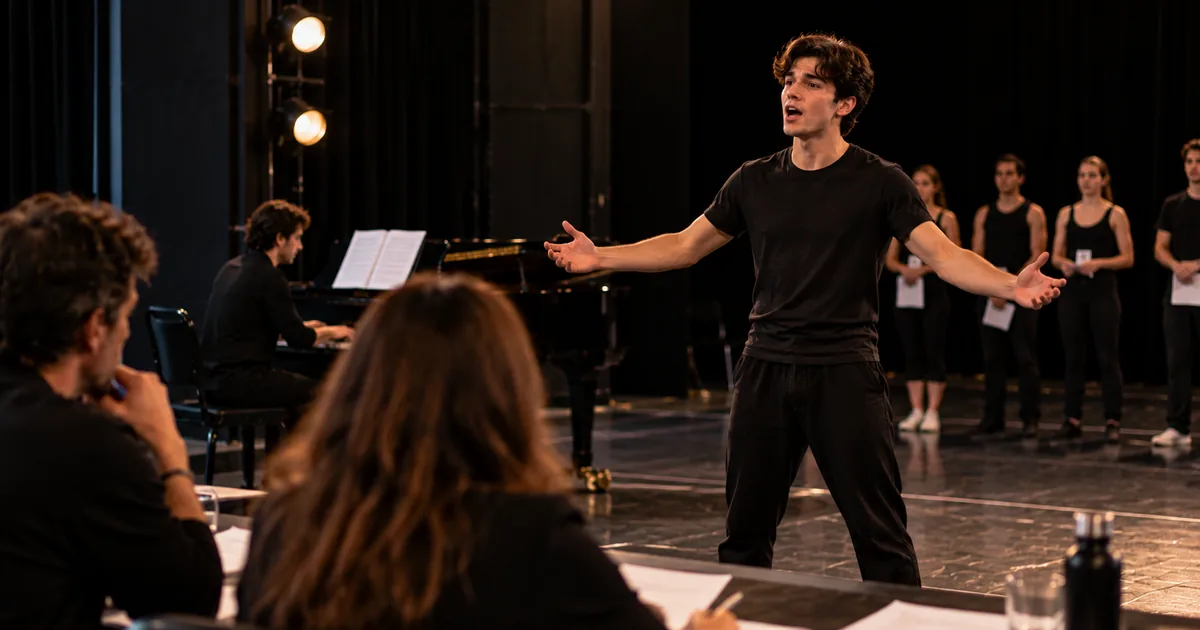
Musical theatre in Spain has seen extraordinary growth in recent years. Madrid and Barcelona have established themselves as two of the European cities with the most musical activity on stage, with productions ranging from the great West End and Broadway titles to original Spanish-language musicals with international ambition. For triple-threat actors —who sing, dance and act—, the musicals sector offers steady work, a professional community and the chance to develop a complete artistic career.
But breaking into that world has its own rules, and musical auditions are a very specific format that requires different preparation from any other casting. This guide explains everything you need to know to show up at a musical audition in Spain with the best possible odds.
The musical actor's "package": In the world of musicals, people talk about the "package" to refer to the combination of the three essential skills: singing, dancing and acting. Professional production companies look for actors who master all three. You don't have to be the best singer AND the best dancer AND the best actor, but a competent level in all three pillars is expected. Investing in all three is the smartest long-term strategy.
The world of musicals in Spain
The main musical production companies in Spain that generate regular work are:
- SOM Produce: Behind titles such as Mamma Mia!, Chicago or El Rey León in Spain. One of the most active on the national scene.
- Stage Entertainment España: An international production company with a presence in Madrid that has brought over titles like El Fantasma de la Ópera or Los Miserables.
- Fila 7 Producciones: Specialised in smaller-scale productions but very active on tours across Spain.
- Pentación Espectáculos: With a long track record in original Spanish-language musicals.
- Pequeño Formato: Regional production companies that feed the circuit of municipal theatres with lower-budget musicals.
How musical auditions work
First open call
Most major productions hold a first open audition (open call) where any actor can show up. At these mass castings, hundreds of people are often called on the same day. The process is fast: each candidate gets between 32 and 64 bars to sing, and perhaps a short movement or dance combination. The goal is to identify raw talent and stage presence.
Callbacks
Candidates selected in the first stage are called back for a second audition, the callback. Here the process is more detailed: you work with text from the specific musical, scenes are performed, and more vocal and choreographic material is asked for. There can be several callbacks, reaching three or four rounds in large productions.
Table reads and contracts
The final stage before rehearsals begin may include a table read of the script with the director and the creative team. It is also the stage where contracts are negotiated, always through agents or representatives.
The three pillars: singing, monologue, dance
The song
Choosing the song for a musical audition is a strategic decision. Some fundamental guidelines:
- Choose a song that shows your real vocal range, not your absolute limit. It is better to sing well within a comfortable range than to push yourself on notes you don't command.
- Avoid songs from the very musical you are auditioning for, unless you are explicitly asked.
- Choose a song with dramatic content. The casting panel doesn't just listen to your voice; it watches whether you can act while you sing.
- Always prepare at least two contrasting songs: one upbeat or comic and one dramatic or showcasing beautiful vocals.
- Bring the sheet music organised for the accompanying pianist and talk to them before going in about the tempo and any variations.
The monologue
Not every musical audition asks for a monologue, but having one ready is essential. Choose a text that shows your range and is appropriate for the tone of the musical you are auditioning for. Avoid overused monologues (the Shakespeare classics or the Lorca texts that everyone uses).
The dance
In auditions with a dance component, a choreographic combination is taught on the spot and you are asked to reproduce it. They are not looking for the technical perfection of a classically trained dancer; they are looking for coordination, musicality, the ability to learn fast and stage attitude.
What to wear and how to behave
Let casting directors find you
Your talent needs visibility. Create your professional profile on Arga Studios and show up in the searches of those who hire. Free until October 2026.
Create my free profile →Dress in a way that flatters your movement and your stage figure. Nothing that gets in the way of dancing, nothing too casual, nothing distracting. High heels in dance auditions are a serious mistake if you can't handle them. Bring dance clothing or comfortable clothes that convey professionalism.
Be punctual, friendly with the whole team —including the pianist and the assistants— and show a positive attitude even when you've been waiting for hours. In the world of musicals, creative teams hugely value a professional attitude.
Fatal mistakes in musical auditions
- Bringing poorly prepared sheet music or in the wrong key
- Singing outside your real range to impress
- Not having memorised the dance combination before going out to perform it
- Apologising constantly if something goes wrong
- Knowing absolutely nothing about the musical you are auditioning for
- Ignoring the accompanying pianist before going in
How to train specifically for musicals in Spain
The most complete training for a musical actor in Spain runs through specialised studies at centres such as the Taller Musical de Barcelona, Carlos Hipólito's school in Madrid, or university drama programmes with a specialisation in musicals. Complementing that training with vocal technique, jazz and contemporary classes is the most solid path.
The secret of musical auditions: Musical casting panels are very aware that they are seeing hundreds of people. What they remember isn't always the one who was technically best, but the one who connected emotionally, the one who filled the room with something genuine. Technique gets you in the door; presence and truth get you the role.
The world of musical theatre in Spain offers long and rewarding careers for those willing to invest in their training and to take on a demanding but thrilling audition process. Start by watching as much as you can, develop your artistic judgement and never stop training all three disciplines in parallel.
Looking for work as an actor in Spain?
Create your profile on Arga Studios and access real castings. Free for actors. Free until October 2026.
Create my free profile →