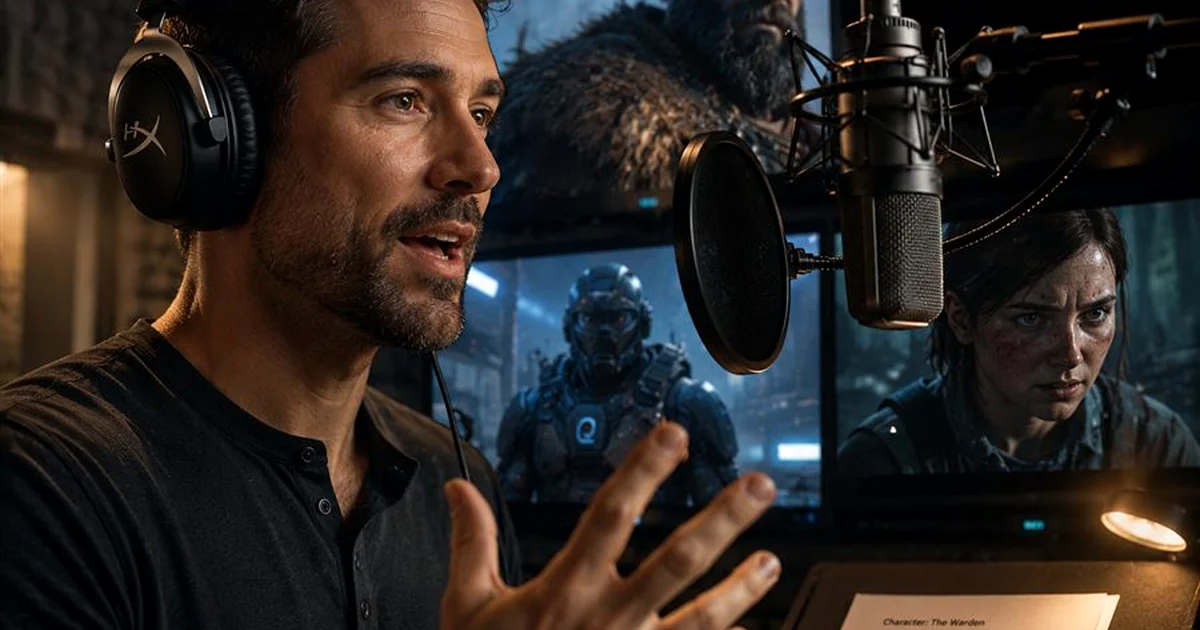
Video game dubbing in Spain is a specific market within the dubbing sector, with its own technical characteristics, vocal demands and routes of entry. For voice actors interested in this specialisation, understanding how the sector works is the first step.
The state of the sector in Spain
Spain is one of the most important video game localisation markets in the Spanish-speaking world. Titles from major publishers (PlayStation, Xbox, PC) are dubbed into Castilian Spanish, and Madrid and Barcelona account for most of the recording activity. Specialised studios such as Technicolor, Soundub or Jenpas have dedicated video game departments.
Technical differences from dubbing series and films
Traditional audiovisual dubbing requires lip sync: the actor has to match the mouth movements of the on-screen character. Video game dubbing differs in several respects:
- No lip sync in most cases: Video game characters rarely have precise facial animation. There is greater articulatory freedom.
- Heavily branching lines: A character may have hundreds or thousands of possible dialogue lines. The actor records multiple variations of the same line at different emotional intensities (neutral, urgent, whispered, shouted).
- Combat dialogue: A significant part of the work consists of shouts of effort, impact, pain and death. These require specific vocal stamina.
- Long, intense sessions: Video game dubbing sessions can run longer than those for series because of the sheer volume of lines. Vocal warm-up and voice care are critical.
How to break into the sector
Let casting directors find you
Your talent needs visibility. Create your professional profile on Arga Studios and show up in the searches of those who hire. Free until October 2026.
Create my profile for free →- Specialised voice demo: Prepare a demo that includes video game characters (hero, villain, informational NPC) and combat dialogue. Gaming dubbing studios look for specific demos, not generic ones.
- Direct contact with studios: Identify the studios that work on video games in Madrid and Barcelona and send your demo with a cover letter. Persistence and follow-up are part of the process.
- Dubbing agencies: Some agencies have sections for video game voice actors. Joining an agency speeds up access to projects.
- Specialised training: There are workshops specialising in video game voice acting in Madrid and Barcelona that prepare you technically and give you access to the sector's network.
Technical requirements for demos and home studios
If you record demos or work on low-budget projects from home, you need a minimally acceptable setup: a mid-range condenser microphone (Rode NT1, Audio-Technica AT2020 or similar), an audio interface, and basic acoustic treatment of the recording space.
Neutral Castilian Spanish: For projects distributed across all of Latin America as well as Spain, many studios require neutral Castilian Spanish (free of regional dialect markers). It is a skill worth developing if you want to access the Latin American market.
What a video game dubbing session is like
Unlike film dubbing, here you often record without seeing the finished character: frequently you only have the text, a reference to the situation and the direction notes. You work in short takes and repeat each line with variations —tone, intensity, effort— so the studio has material that will later fit the animation. The ability to imagine the context and to sustain energy through long sessions makes the difference.
The challenge of recording blind
It is common to dub fights, physical exertions or reactions without knowing exactly how the scene will look. That is why the dubbing director is your best ally: trust their notes, ask when something is unclear and keep the character consistent even if you record their lines out of order. A good gaming actor builds the character from minimal clues and keeps it recognisable from start to finish.
Rates and terms: what you should know
Dubbing in Spain is governed by sector agreements and is usually paid per session and by volume of work, not with a single universal fixed figure. Before accepting, clarify the number of sessions planned, the uses and distribution of the game, and whether the licensing of your voice includes future uses. Having these terms in writing is part of working as a professional, including on small projects.
Frequently asked questions
Can I get started in video game dubbing from home?
To prepare your demo, yes: a decent condenser microphone, an interface and basic acoustic treatment are enough. Professional recordings, on the other hand, are done in studios with direction.
Is video game dubbing the same as film dubbing?
They share microphone technique, but video games call for more extreme vocal work, recording blind without the final image and, often, capturing the same line with many variations.
Create your actor profile on Arga Studios
Connect with casting directors across Spain. Free. Free until October 2026.
Create my profile →