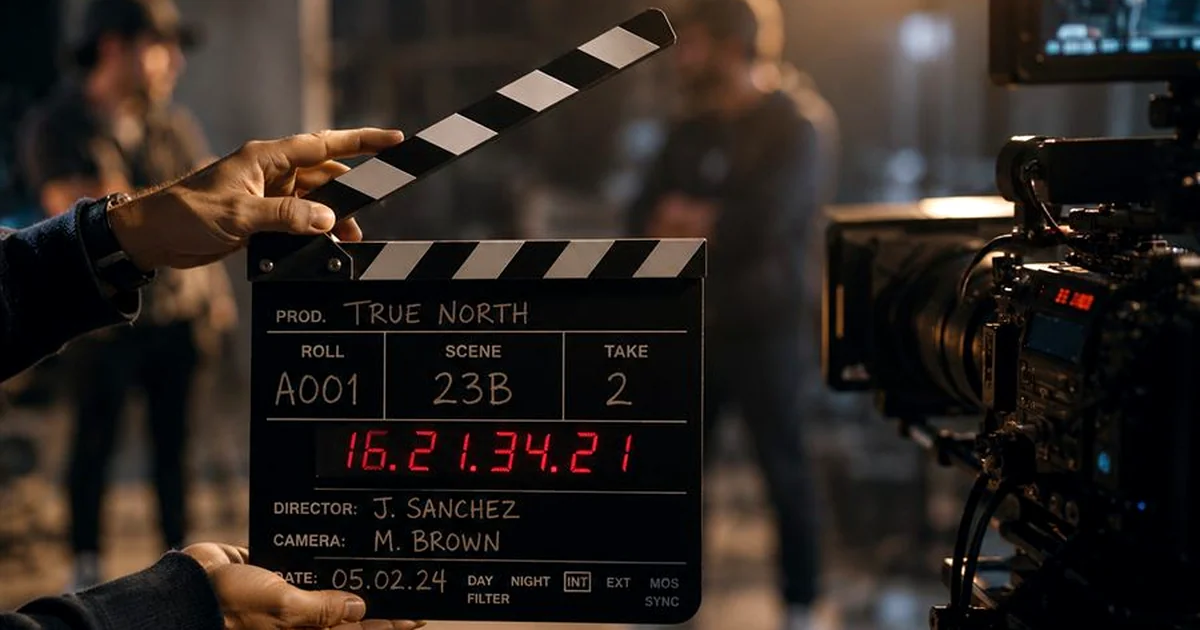
Your first feature film shoot is unlike any short film or web series you may have worked on. The scale, the number of people, the length and the intensity are all different. Knowing what to expect lets you arrive prepared rather than overwhelmed.
The size of the crew and the hierarchy
A feature shoot can have between 30 and 150 people working at the same time. There is a very specific, unwritten hierarchy worth knowing: the director is the creative authority, the producer is the executive authority, and the first assistant director (1st AD) is the one who runs the set. Most operational instructions will reach you from the 1st AD or the assistant directors, not from the director directly.
As an actor, your main technical contact on set is the director. Your logistical contact is the directing team (1st AD, assistants). Respect that distinction: don't go to the director with logistical questions (where is my dressing room, what time is my call) and don't go to the assistant with questions about the character.
Call times and waiting times
A shoot follows a logic of time very different from what you imagine from the outside. You'll receive a call sheet with your arrival time, but that doesn't mean you'll be filming at that hour. Technical setbacks, location changes and delays in earlier scenes are common. A professional actor arrives on time, is ready on time and doesn't get frustrated when the wait drags on.
Downtime on a shoot is part of the job. Use it to go over your lines, rest, mingle discreetly with the crew or prepare the emotional state you need for your next scene.
Continuity and script notes
Let casting directors find you
Your talent needs visibility. Create your professional profile on Arga Studios and show up in the searches of those who hire. Free until October 2026.
Create my profile for free →The script supervisor keeps track of continuity: the position of objects, wardrobe, hair, which hand was holding the glass. As an actor, you must be aware of your own physical patterns from take to take. If you're not sure how you were in the previous take, ask the script supervisor: it's their job and they would rather you ask than have a continuity error that ruins the film.
The relationship with the director
On a long shoot, the relationship with the director is built gradually. Don't expect the director to have time for long conversations about the character between takes. The notes will be brief and specific. “Slower”, “less emotional”, “look lower”. Your job is to implement them quickly and without unnecessary questions.
If you have an important conceptual question, find a quiet moment (before the day starts or during the lunch break) to raise it. Never in the middle of preparing a take.
The golden rule of the set: Always arrive 10 minutes before your call. Know your lines perfectly before the shoot, not during it. Listen to instructions the first time. These three habits set you apart from half the actors from day one.
Set glossary: what you'll hear
On the first day a language of its own is spoken. Recognising these terms saves you from going blank in the middle of a take:
| “Quiet, rolling” | Recording begins; no one talks or moves. |
| “Action” / “Cut” | Start and end of the take. Don't drop out of character until you hear “cut”. |
| “Back to one” | Return to your starting point to repeat the take. |
| “Your mark” | The mark on the floor where you must stand to be in focus. |
| Continuity (raccord) | The consistency of gestures and objects between takes and shots. |
| Video village | The monitor where the directing team watches the take; don't stand in front of it without permission. |
What to bring on the first day
- Your lines reviewed and, if you can, a printed copy with your notes.
- Comfortable clothes for the waits (that won't interfere with wardrobe).
- Water, something to eat and, if you take medication, whatever you need for a long day.
- Patience: a large part of the day is waiting. Bringing something to keep you occupied without disconnecting from the scene helps.
Basic set etiquette
The unwritten rules matter as much as the acting. Greet the crew, learn the names of those who work closely with you —camera operator, script supervisor, wardrobe, make-up—, respect the schedule and don't touch technical gear that isn't yours. A polite, punctual actor who is easy to direct is someone they want to call back; talent opens the door, but conduct keeps it open.
Frequently asked questions
Why is there so much waiting time on a shoot?
Between takes the crew repositions lights, camera and sound, which takes time. It's normal to spend more hours waiting than filming; knowing how to handle it is part of the craft.
Can I suggest ideas to the director in the middle of filming?
Important questions are raised at a quiet moment (before the day or at lunch), never while a take is being set up. During recording, your job is to apply the notes quickly.
Create your actor profile on Arga Studios
Connect with casting directors all across Spain. Free. Free until October 2026.
Create my profile →