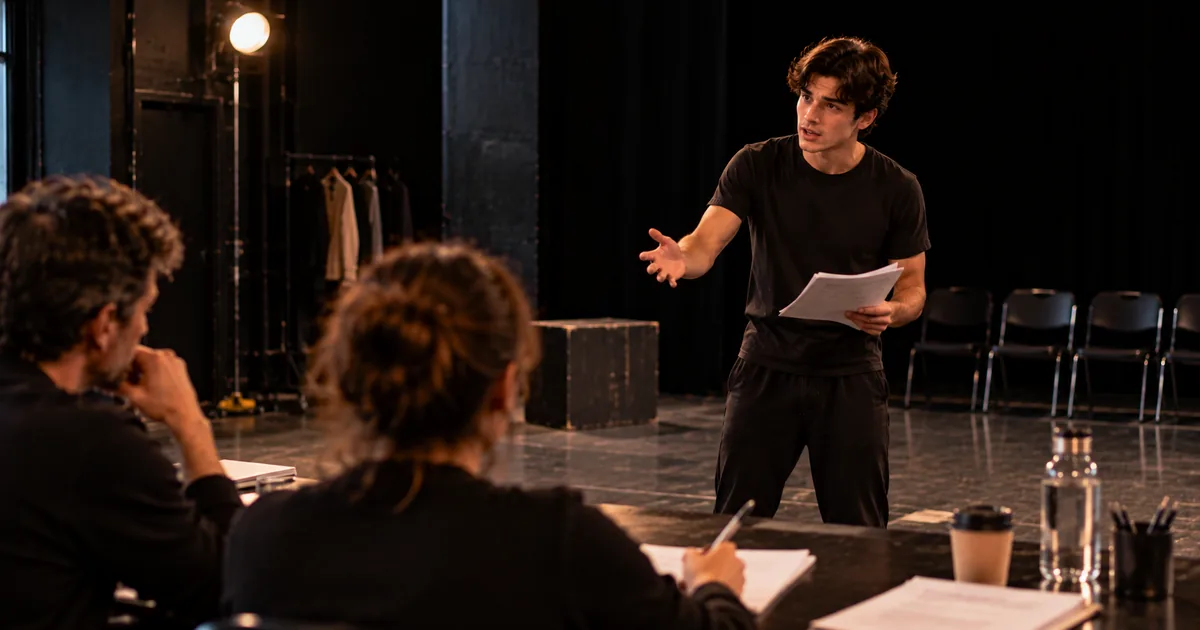
A theatre audition is one of the most concentrated moments in an actor's career: two minutes to demonstrate months of work. The good news is that, unlike how it looks from the outside, auditions aren't won by the most "gifted" but by the best prepared. This guide walks you through every stage of the process.
Step 1: Analyse the call before choosing your monologue
Before you start rehearsing, read the casting call carefully. Ask yourself:
- What kind of production is it? (Drama, comedy, musical, physical theatre...)
- What age range are they looking for?
- Are they asking for a classical monologue, a contemporary one, or specifically by a certain author?
- Are there any duration limits? (usually 2-3 minutes)
- Is a song expected on top of the monologue?
Your choice of monologue should be informed by these answers. A brilliant monologue that is completely out of style for that production is a strategic mistake.
Step 2: Choosing the right monologue
The ideal monologue for an audition has these qualities:
- It represents you. Use your natural type; don't try to be someone you're not.
- It has an emotional arc. It starts in one state and ends in a different one.
- It has clear dramatic action. The character wants to achieve something concrete.
- It isn't overdone. Avoid very famous monologues (Hamlet, Yerma...) unless you have a very personal, fresh take on them.
- It runs between 90 seconds and 2 minutes. Anything longer usually works against you.
Common mistake: Choosing the most emotionally difficult monologue to "prove" you can cry on stage. Theatre directors would rather see clarity of thought and action than tears. Crying without intention communicates nothing.
Step 3: Text analysis — before you memorise
Most actors rush to memorise without having analysed the text. This is a mistake that shows in the performance. Before learning the words by heart, answer these questions about the character:
- What does the character want when saying this text? (a concrete objective)
- Who are they saying it to? (even in a monologue there's an implied listener)
- What has just happened before the monologue begins?
- What obstacle or conflict drives the words?
- What changes for the character by the end of the monologue?
With those answers written down, memorising becomes far more organic because you already know why you say each line.
Step 4: Physical and vocal preparation
Let casting directors find you
Your talent needs visibility. Create your professional profile on Arga Studios and show up in the searches of those who hire. Free until October 2026.
Create my free profile →Theatre demands the body and the voice at the same level as the acting. The week before the audition:
- Do a daily vocal warm-up: diaphragmatic breathing, resonators, articulation.
- Rehearse on your feet, using the space. Not just sitting on the sofa.
- Record yourself on video and review: are you in your head or in the character's body?
- Rehearse under different conditions: with noise, without a mirror, with other people watching.
Step 5: The day of the audition
Before going in
- Arrive 15 minutes early. Use that time to breathe, not to go over the text.
- Do a quick vocal warm-up in private (a stairwell or outside the building).
- Wear something that makes you feel good but doesn't distort the character (avoid costumes).
In the room
- Walk in with confidence. The first impression starts with the step you take through the door.
- Greet them naturally, without apologising or making excuses.
- If the director asks what you'll be working with, answer briefly: title, author, character.
- Take a second to ground yourself before you begin. Don't start from chaos.
- If you go blank in the middle of the monologue, stop, breathe and pick it back up. Don't apologise.
When you finish
- Finish with presence. Don't apologise for what went wrong.
- If they offer notes to repeat the scene, take them enthusiastically. It's a good sign.
- Leave with the same confidence you walked in with.
What theatre directors hate to hear: "I know it didn't go the way I wanted, I'm just really nervous." Don't say it. Ever. Directors know perfectly well what they've seen. Your apologies change nothing and project insecurity.
Step 6: After the audition
The process doesn't end when you leave the room. If you have the chance to send a thank-you for being called in, do it. If you don't land the part, analyse what you can improve. Post-audition reflection is one of the most valuable habits of actors who develop quickly.
Find theatre castings on Arga Studios
Create your profile and get notifications about theatre castings across Spain. Free for actors.
See theatre castings →